Centralising Apple’s internal data using AI
· 2024 · Shipped

Role
Product Designer
Product
Apple Data Intelligence
Team
Business designer
Product Designers
Developers
SMEs
Timeline
Apr ‘24 – Jan ‘25
How should Apple centralise their internal data platforms?
Apple had been struggling to manage their internal data flows for a while, and our goal was to help them conceptualise a solution. Thinking broadly about the AI landscape we explored how this emerging technology could solve key pain points. Through rounds of rapid prototyping and iteration, our team of two product designers and one business designer aimed to bring a clear vision to life in 8 weeks.
I was in charge of the UX and UI design of the envisioned platform.
SOLUTION
CUBIC: A dashboard-based energy usage calculator providing data-driven analysis of electricity flow across the UK.
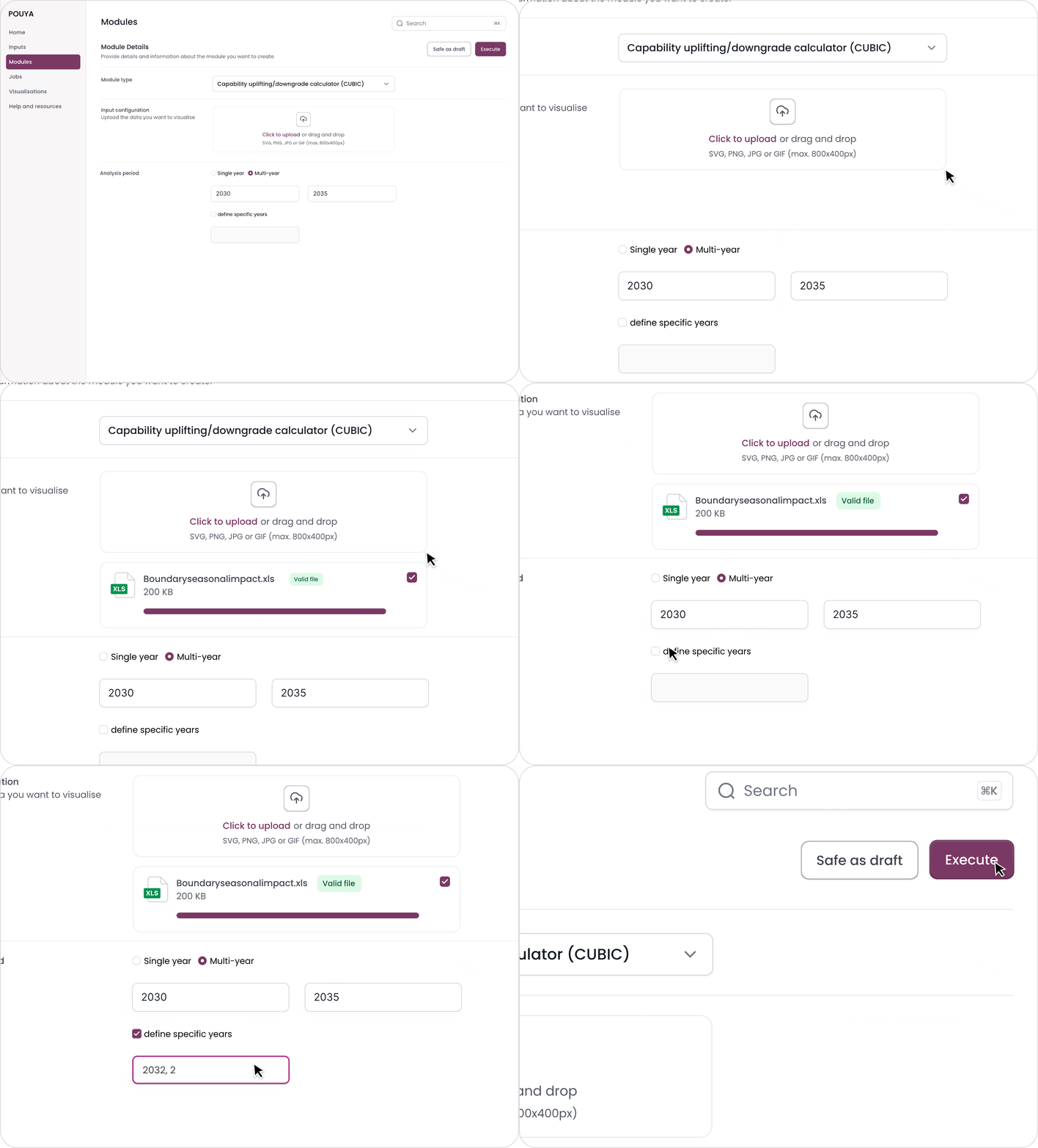
Intuitive data upload and execution
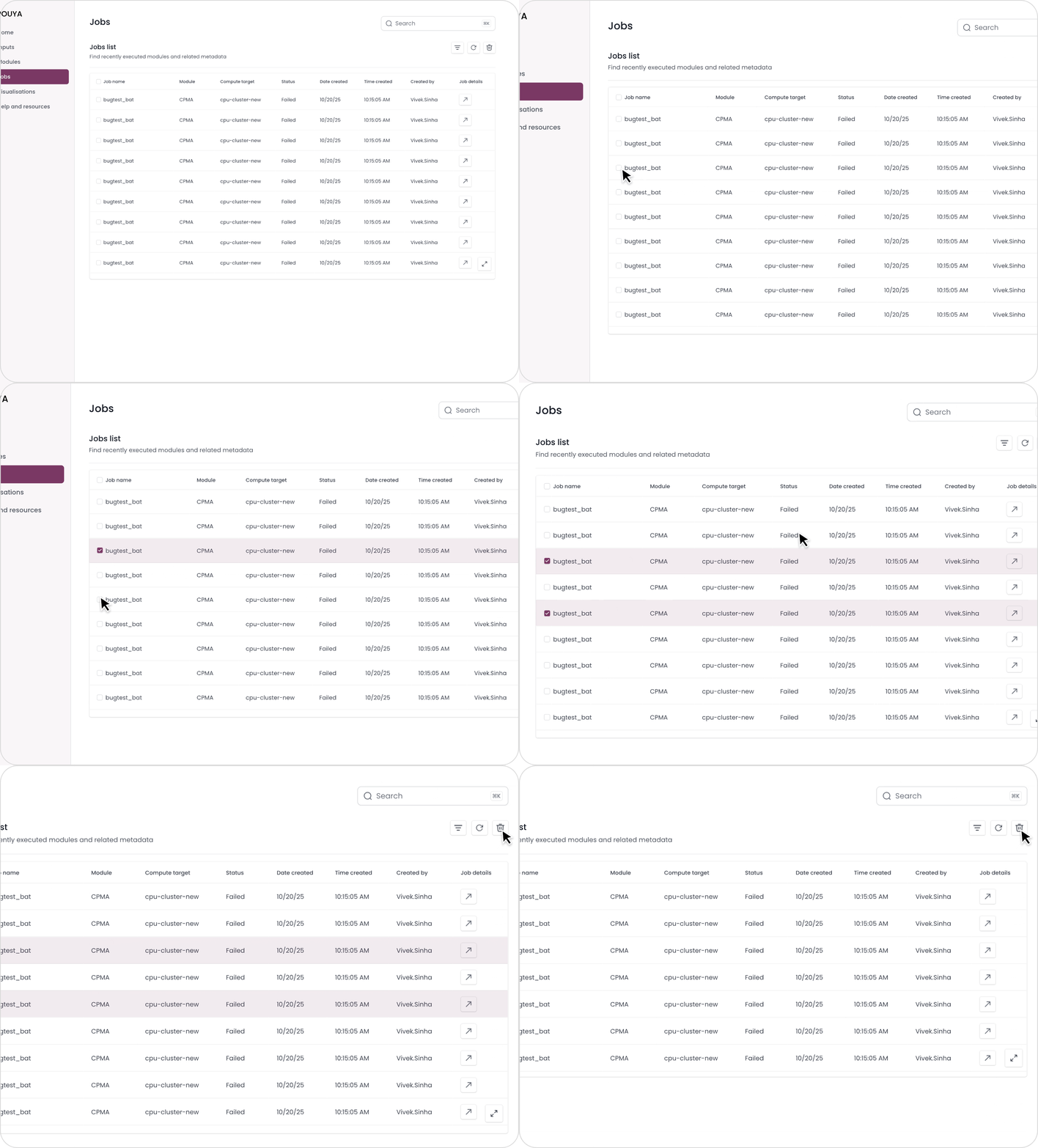
Easy access to jobs and metadata
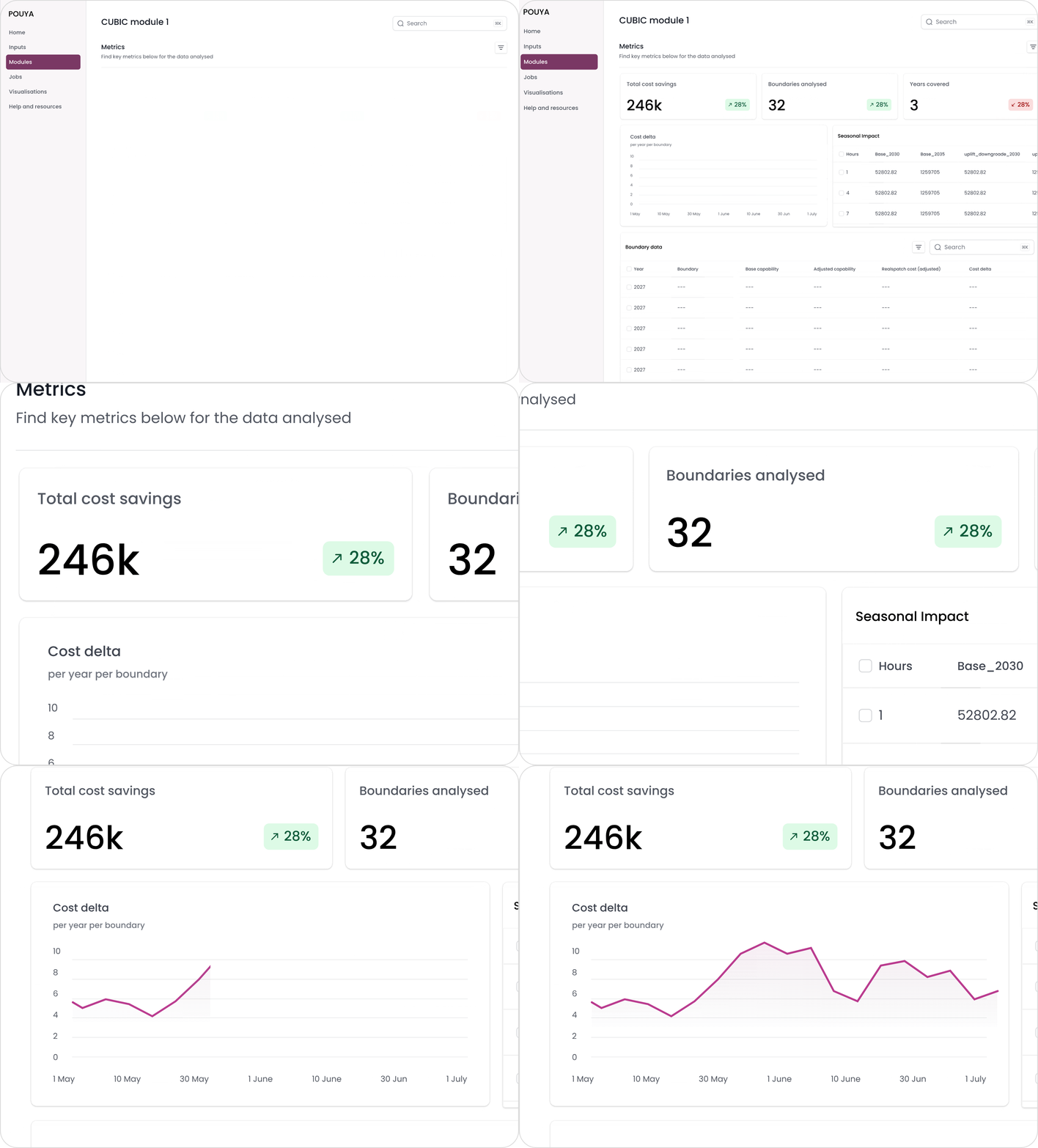
Dashboard visualisation of executed data
IMPACT
CUBIC is expected to save NESO both time and money in power-associated costs:
7000 watts of energy saved.
7000 watts of energy saved.
7000 watts of energy saved.
INITIAL OBSERVATIONS
There is no centralised and low-cost solution that allows energy regulators to accurately manage power transfers across the boundary lines.
Grid congestion is hard to predict and usually relies on manual and fragmented calculations, via tools like PowerFactory, to balance costs. Initial discussions with energy regulators (transmission owners, policy makers etc..) uncovered some key pain points:
PAIN POINTS
1. Manual calculations
Due to the manual nature of current tools, fewer scenarios could be tested.
2. Incorrect forecasting
Over or under-estimating energy capability increased costs unnecessarily.
Speaking with a variety of stakeholders, it was clear that the current market of tools was limiting their ability to accurately forecast energy requirements; driving a fear with engineers of purposely setting conservative limits where the grid may have been able to handle more. This validated the purpose and unique position of CUBIC to be able to encourage accurate investment decisions and lower consumer costs.
MARKET RESEARCH

cost to maintaince graph - like chen
ADVANCED TOOLS
Advanced tools like PLEXOS are incredibly slow and taxing. This makes it easy for energy operators to just "simplify" the number and type of scenarios they calculate in order to reduce costs.
LEGACY SYSTEMS
Many legacy systems were built for gas and coal. With NESO (and others’) focus on carbon-neutrality, these systems struggle to factor in emerging energy needs.
DETERMINISTIC VS PROBABILISTIC
Most current tools e.g. Power Factory are deterministic (focusing on worst-case scenarios), which doesn’t take into account the frequent changes in energy usage.
COMPETITOR RESEARCH
On the whole, competitor products are overly-complex and lack user-centricity.
ask for some iamges of current tools not being begginer friendly
These tools are highly complex and bloated. The key was to retain technical functionality, while freeing up screen real estate for more relevant features.
DESIGN PROCESS
A streamlined energy capability calculator covering over 80,000 scenarios.
We now had a good idea of the problems stakeholders ran into with their existing toolset, so we decided to frame them in “How might we” statements as we begun exploring solutions.
How might we provide a better experience than the current tools?
We began defining a more streamlined data upload process that broke down steps into manageable chunks as well as minimise friction.
how might we - with accompanying final design
After that, we simplified the post-execution process with a ‘jobs’ feed that clearly lists out executed jobs with related metadata, making it easy to keep track.
how might we - with accompanying final design
What if we made calculating and forecasting flexible and easy to interpret?
We found that some energy regulators wanted a more ‘live’ view of how energy usage could change over time within their defined parameters. This would allow them to approve investment decisions and set price controls more effectively by more readily responding to changes in usage and cost.
how might we - with accompanying final design
While this was a need worth addressing, it wasn’t in the scope for the first build phase of the product. With a big enough need from stakeholders, the plan would be to validate it at scale and address it in the second round of work.
FINAL DESIGNS
We simplified a once convoluted path to maximising energy usage in the UK.
The CUBIC interface is a highly intuitive step-by-step process for uploading, managing, and calculating energy usage between UK boundary lines. Offering the essentials needed to visualise all possible yearly scenarios, without the bloat.
Final screen like chen has done with some annotations
CONCLUSION
CUBIC continues to grow and shape NESO’s energy spending.
As a result of my work, NESO now have a simple way to cut down on the cost of increasing or decreasing energy usage across the UK, while being able to plan ahead with the abundance of scenario’s they can calculate for. What will be interesting to see is how this new process will lower energy bills for consumers.